During the International Gibbon Day 2020 event, representatives from 20 gibbon conservation organizations came together for the first time to discuss gibbon conservation. During the event, Eco Foundation Global, the Hainan Institute of National Park, the IUCN Species Survival Commission Section on Small Apes (IUCN SSA), the Zoological Society of London (above in alphabetical order) and other organizations jointly launched the Global Gibbon Conservation Network Initiative that has been published on the IUCN website since 17 December 2020, calling on the world to join forces to establish a Global Gibbon Network (GGN).
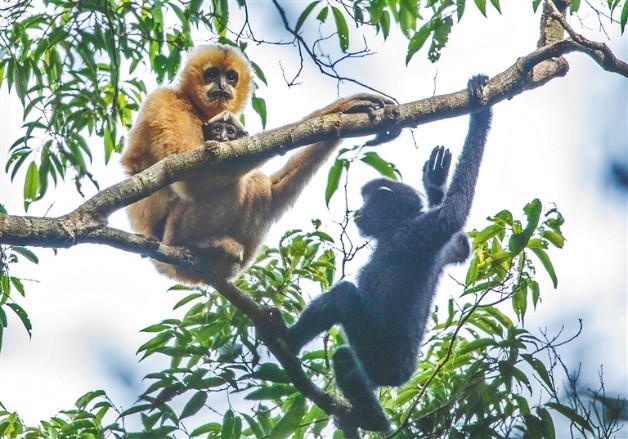
Gibbons, the smallest and fastest of all the apes, live in tropical and sub-tropical forests in Southeast Asia. Like all apes, they are extremely intelligent, with distinct personalities and strong family bonds. Unfortunately, the current conservation status of gibbon species is alarming; all 20 species are at a high risk of extinction. Since 1900, gibbon distribution and populations have declined dramatically, with only small populations in tropical rainforests. 2019 and 2020 global gibbon red list assessments show that populations of 19 of the world’s 20 gibbon species continue to decline, with only Hainan gibbon populations maintaining a steady increase. As reported by the IUCN, gibbons are one of the most threatened families of primates. The conservation of gibbons and their habitats is of great importance to global ecosystems and biodiversity conservation. Therefore, gibbon conservation requires urgent global attention.
Our Vision and Mission
The vision of the GGN is to safeguard and conserve a key element of Asia’s unique natural heritage: the singing gibbons and their habitats, by promoting participatory conservation policies, legislations, and actions.
The mission of the GGN is to increase awareness of scientifically-sound practices in gibbon conservation and sustainable development as well as strengthen exchange and cooperation between global gibbon conservation institutes.
Our Members

 Global Gibbon Network